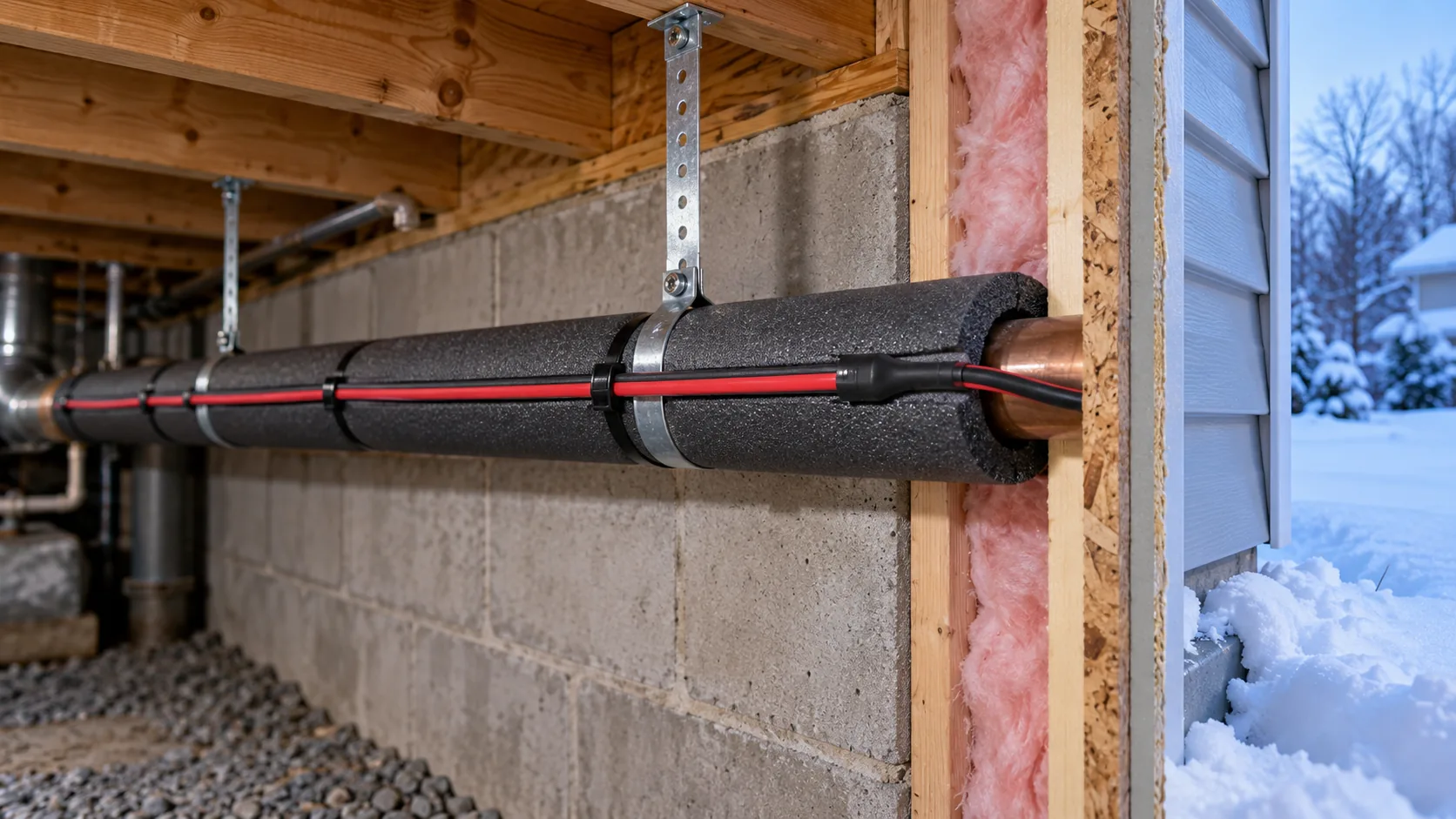
The right time to deal with a pipe that's frozen every winter for the last few years is October. Insulation, heat tape, and sealing the gaps that let cold air reach a pipe are all projects with a normal weekend timeline. None of them are things you want to be figuring out for the first time with a fitting already spraying water.
Where pipes freeze, and the fix that matches each spot
| Location | What actually helps | Why |
|---|---|---|
| Exterior-wall plumbing | Foam pipe sleeves at minimum; ask a plumber about rerouting during any remodel that opens the wall | These pipes sit closer to outdoor temperature than almost anything else in a conditioned house |
| Unheated crawlspace or basement | Insulate every accessible run, and close foundation vents for the season if your crawlspace design uses them | Crawlspace air can track close to outdoor temperature even when the rooms above stay warm |
| Attached garage | Insulate any pipe that passes through, and keep the garage door closed during cold snaps | An open garage door removes whatever small heat buffer the space was providing |
| Attic runs | Insulate the pipe itself, not just the attic floor around it | A pipe can end up colder than the room below it if insulation goes everywhere except around the pipe |
| Any pipe with a repeat freeze history | Add UL-listed heat tape in addition to insulation | Insulation slows heat loss; it doesn't add heat back for a pipe that's already proven it can't stay above freezing on its own |
Foam sleeve or heat tape: they solve different problems
A foam pipe sleeve slows how fast a pipe loses heat to cold surrounding air, which is enough for most moderately exposed plumbing in a house that stays heated. It isn't a heat source. A pipe wrapped only in foam can still freeze during an extended cold snap or a heating failure, especially in a crawlspace or garage that tracks close to outdoor temperature for days at a time. Heat tape is different. It's a thermostatically controlled cable that adds warmth along the pipe, and it's the right tool for a run that has already frozen before or sits in an unheated space all winter.
Use only UL-listed heat tape rated for the application; interior and exterior products aren't interchangeable. Follow the manufacturer's instructions on wrapping without overlaps and on which insulation, if any, is safe to add on top. Plug it into a GFCI-protected outlet, and don't assume a product is fine to leave running unattended all season just because the package says thermostatically controlled. Check it periodically like any other piece of equipment with a plug.
Signs a pipe needs more than what you've already done
- The same pipe has frozen in a previous winter despite being wrapped.
- Frost or visible ice forms on the outside of the pipe itself.
- A specific room or section of floor runs noticeably colder than the rest of the house.
- Insulation ended up on the warm side of the pipe instead of between the pipe and the cold.
Red Cross guidance says 55°F or warmer when leaving during cold weather. Exposed pipes may still freeze; insulate vulnerable runs and plan for outages.
When 55°F guidance applies—and what it cannot guarantee
The American Red Cross advises keeping a home at 55°F or warmer when leaving during cold weather; FORTIFIED/IBHS gives similar risk-reduction guidance. Treat this as a baseline, not a guarantee: exposed pipes can still freeze depending on drafts, insulation, outage duration, and outdoor temperature. Prioritize vulnerable pipe locations, seal cold-air leaks, and arrange a temperature alert or backup plan if the home will be unattended.
When a hard freeze is in the forecast
- Open the cabinet doors under sinks on exterior walls so warm room air reaches the pipes.
- Let a thin, steady trickle of cold water run from the faucet served by your most exposed pipe.
- Keep the garage door closed, and close any crawlspace vents you left open in warm weather.
- Hold the thermostat at the same temperature day and night instead of setting it back.
Moving water is harder to freeze, and a trickle also relieves pressure that can build between a frozen plug and the faucet.
If a pipe does freeze
If you turn on a faucet and only a trickle comes out, suspect a frozen pipe. Leave the faucet open, find your main shutoff valve so you can close it fast, and warm the frozen section slowly with a hair dryer or a heating pad. Start near the faucet and work back toward the frozen spot. Never use a blowtorch, a propane heater, or any open flame. If you can't find the frozen section, can't reach it, or see that the pipe has split, close the main valve and call a plumber.
Where this stops being a weekend project
Some jobs belong to a licensed plumber or electrician. Opening a finished wall or ceiling to add insulation, rerouting a pipe out of a chronically cold space, and wiring in permanent heat-tracing beyond a simple plug-in cable are all on that list. So is any pipe that has already split: shut off the water at the nearest valve and call a professional rather than working on a pressurized line yourself. The insulation and heat-tape work covered here is meant for accessible pipes you can already see and reach.
None of this is expensive compared with the alternative. A foam sleeve costs a few dollars a run, and heat tape costs more but still far less than the drywall, flooring, and cleanup that follow a burst pipe. Spend first on whichever pipe would cause the most damage if it split. That might be one above finished living space or behind a wall you'd have to open to reach it. Don't treat every exposed inch of pipe as an equal priority.
Frozen-pipe prevention questions
Is pipe insulation by itself enough to prevent freezing?
For most moderately exposed pipes in a house that stays reasonably heated, yes. Foam insulation slows heat loss enough to get through a normal cold night. It isn't a heat source, though. A pipe in a crawlspace, garage, or exterior wall that has already frozen before needs UL-listed heat tape in addition to insulation, especially during an extended cold snap or any period without reliable heat.
Which pipes should I prioritize insulating first?
Start with anything in an unheated crawlspace, basement, garage, or attic, plus any run inside an exterior wall. These track much closer to outdoor temperature than plumbing surrounded by conditioned living space. Within that group, prioritize any pipe with a history of freezing or reduced flow in a past cold snap. A repeat freeze location is telling you insulation alone hasn't been enough there before.
Is it safe to leave heat tape running for the whole winter?
A UL-listed, thermostatically controlled heat tape product is designed for extended seasonal use on a GFCI-protected outlet, but designed for it isn't the same as never needing a look. Check the cable periodically for damage, and make sure it wasn't installed with overlapping wraps. Before the season starts, follow the manufacturer's instructions about which insulation types are safe to add on top of it.